TAIMA | Food Flavor Application Guide
Liquid Smoke vs Smoke Flavor Powder
A practical selection guide for food manufacturers developing BBQ sauces, meat products, savory snacks and dry seasonings.
Food manufacturers often need a smoky note without relying solely on a traditional smoking step. Both liquid smoke flavors and smoke flavor powders can be considered during product development, but the two formats are not automatically interchangeable. The right choice depends on the finished food, the flavoring grade and the production process.
Quick Answer: Which Format Should You Evaluate First?
For BBQ sauces and liquid marinades, a liquid smoke flavor is often a convenient starting point. For dry seasonings, snack coatings and spice rubs, a smoke flavor powder may fit more naturally into the existing blending process. Neither format is universally stronger, more stable or better: confirm compatibility and sensory results through trials with the specific grade.
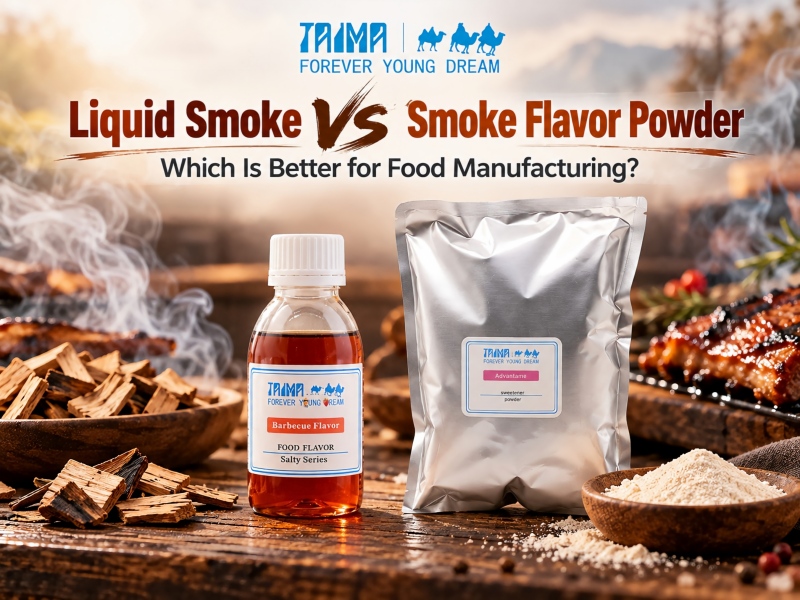
A liquid smoke flavor is a fluid ingredient used to introduce smoky sensory notes into food. The term is used commercially for different types of formulations. In some contexts, “liquid smoke” refers to smoke condensates; in others, a liquid flavoring is a formulated blend with a smoke-like sensory profile. Composition and regulatory classification should not be inferred from the liquid form alone.
Liquid grades are commonly evaluated in sauces, marinades, processed foods and other manufacturing systems that already have a liquid addition stage. A developer should still confirm dispersibility, water or oil compatibility, flavor balance and processing performance for the individual product. For a liquid-format example, explore TAIMA's Hickory Liquid Smoke Flavor.
Smoke flavor powder is a dry-format flavoring intended to contribute smoky taste and aroma to suitable food products. It is a practical option to evaluate in dry seasoning blends, potato-chip coatings, savory snack applications and powdered mixes.
Its behavior depends on the actual flavor system and carrier. Flow, moisture sensitivity, particle distribution and final sensory results should be checked in a representative formulation. A powder format by itself does not prove superior heat stability or longer shelf life. Learn about TAIMA's Smoke Flavor Powder for dry-format food flavor development.
The following points are starting considerations for formulation work, not fixed product specifications.
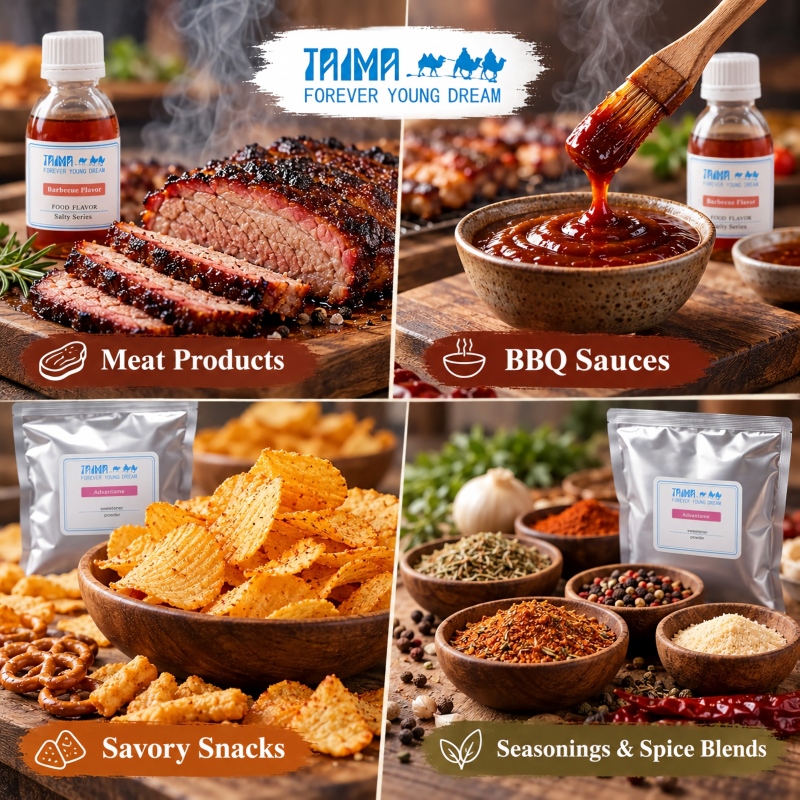
A sauce manufacturer with an existing liquid blending step may begin by trialing a liquid smoke flavor. The team should evaluate how the flavor interacts with acid, sugar, salt and other ingredients, and then check the finished sauce after its normal processing and storage steps. A powder can still be assessed if its grade and manufacturing process support it.
A snack producer using a dry seasoning drum may find smoke flavor powder convenient to test as part of the seasoning premix. Important checks include blending uniformity, powder adhesion, flavor distribution and the result after packing. The best format should be selected from actual coating trials, not appearance alone.
For processed meats and suitable plant-based formulations, the choice depends on the production stage, target aroma and route of incorporation. Both liquid and powder grades may be considered, subject to product suitability and destination-market requirements. Run pilot trials and assess the product after cooking or other relevant processing.
Dry rubs and powdered seasoning systems often make the powder format a logical first candidate. Check how the ingredient blends with salt, sugar and spices, and evaluate the finished seasoning for aroma consistency and behavior during storage.
Example 1: BBQ-Flavored Potato Chips
Start with a powder-format candidate in the existing dry seasoning blend. Evaluate coating uniformity, smoky aroma after packing and the interaction with chili, salt and other savory notes. Compare samples after the same seasoning and storage process.
Example 2: Ready-to-Use BBQ Sauce
Start with a liquid-format candidate added at a suitable point in the normal blending process. Check compatibility with the sauce base, smoke intensity, aftertaste and sensory behavior after filling and storage. Do not assume that a powder or liquid can replace the other at a 1:1 addition rate.
Before approving a smoke flavor for production, buyers and R&D teams can use a consistent sample evaluation process:
The suitable use level must be determined for the actual product formulation. Different grades may have different flavor strengths and should not be treated as directly interchangeable.
Requirements vary by destination market and by the identity and classification of the ingredient. “Smoky flavor” is a sensory description and does not, on its own, establish the regulatory category of a formulation.
For the European Union, Commission Implementing Regulation (EU) 2024/2067 and related non-renewal decisions establish phase-out measures for specified smoke flavouring primary products. Under the applicable conditions, foods containing those specified products could be placed on the market until 1 July 2026 for most food categories, or until 1 July 2029 for certain cheese, meat, processed fish and fish roe categories. These provisions do not automatically determine the status of every ingredient with a smoky aroma. Manufacturers should verify each grade's identity, classification and intended use before developing an EU-market product. See the European Commission's official guidance for details.
Customers targeting other markets should likewise confirm applicable national requirements and request documentation for the selected product grade.
No. It is often convenient for dry seasoning systems, but the final decision depends on the grade, coating method and desired finished-food aroma.
Liquid smoke flavors are commonly considered during sauce development. Verify the chosen grade's compatibility and assess flavor after the normal manufacturing process.
There is no universal answer. Heat performance is grade-specific and must be evaluated under the customer's processing conditions.
Not without validation. Flavor strength, formulation and carrier content may differ. Request product-specific guidance and compare pilot batches.
Provide your food category, target smoke profile, processing method, destination market and expected trial quantity. This helps TAIMA discuss suitable grades and available documentation.
Explore TAIMA's Smoke Flavors category to review our smoke flavor range. For dry seasoning and savory snack projects, see Smoke Flavor Powder. For liquid-format flavor development, see Hickory Liquid Smoke Flavor. Contact TAIMA to discuss the most suitable option for your formulation.
Request Smoke Flavor Samples & Product Information
Tell TAIMA your application, target smoke profile and destination market. Our team can discuss sample requests, quotations and available technical documentation for the appropriate smoke flavor product.
Email: alina@taimacn.com
WhatsApp: +86 15619038117
Contact us for price, sample, MOQ and OEM support.
✔ Reply within 12 hours
Get Quote on WhatsApp Request SampleWhatsApp: +86 15619038117
Email: alina@taimacn.com
 Alina
Alina